 By James
  When Netflix released Squid Game in 2021, it was translated into over 30 languages. It didn’t just become a global hit because of its storyline or cast overnight. It was subtitled and dubbed in multiple languages — and that’s the power of localisation. The translators who worked on the show turned the local idea into a global phenomenon.
Today, we can see that different companies and brands are rushing to grab as much market share as possible. Most of them use localisation and translation as the key strategies for growth and international expansion.
Companies in different domains, from healthcare to finance and e-commerce to gaming, are all investing in communicating in the local language, and those who aren’t? They are losing out fast.
In this article, we will discuss the top market trends in 2025 and 2026, and the surging demand for these translations. We’ll also speak to the translation industry’s top experts to learn why language translation and localisation services matter in today’s world.
Machine Translations: Yay or Nay?
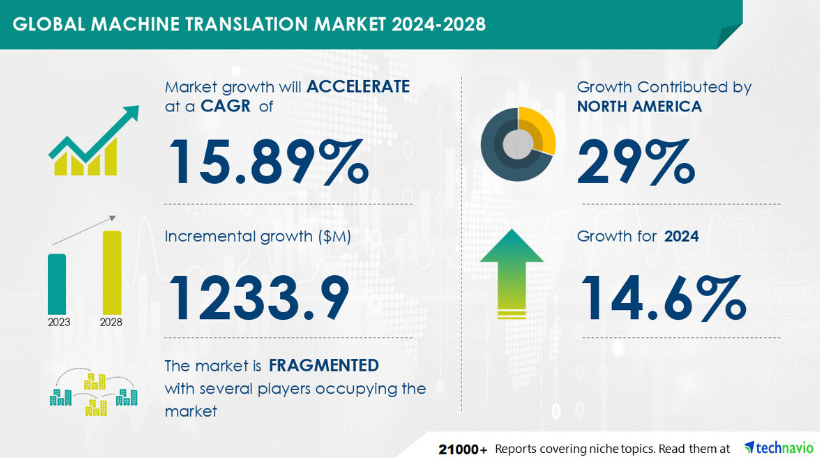
The machine translation market is expected to grow by USD 1.23 billion by 2028. Wonder why? Part of the reason is that consumers today expect localisation as a given. They need content that reflects their culture, language nuances, and buying behaviours.
This shift towards targeted marketing translations is driving growth today. Even though multilingual AI tools are readily available, they still have a long way to go. We can’t rely on them alone for translations, which is why we use a combination of machine translations with a human perspective.
The Importance of Professional Translations For Businesses
But why are translation services so important in today’s international business world? Nowadays, companies and organisations across virtually all sectors invest heavily in content translation, localisation and other language solutions.
Does this allow them to reach a broader global audience? Do translation services help them in creating a professional brand image internationally? Does translated content increase sales?
To gain an expert’s view, we reached out to Ashley, a senior translation specialist at TS24 London (Translation Services 24), one of the UK’s leading providers, to understand the true advantages of translation services, and how businesses can benefit from working directly with professional translation agencies, such as TS24.
Ashley told us that: “The number of businesses that require professional translations has increased significantly in 2025, and we expect this trend to continue in 2026.” She added, “At TS24, we partner with some of the world’s leading brands that require expert language solutions to successfully enter international markets and reach global audiences. Working with a translation agency guarantees not only the highest linguistic accuracy for the translation, but also a deep cultural understanding of the marketing and target audience. This allows brands to connect with their potential customers in a more meaningful way.”
What is Language Localisation?
Have you ever encountered a website or app that’s not just in your native language but also looks and feels like it? It may come as a surprise, as you’d think, being an international brand, how did they know all that?
That’s the magic of localisation. It goes beyond translation to tailoring the content to the local preferences and culture. Localisation means adapting the content, products, and services to meet a particular market’s cultural and linguistic needs.
It’s like a step ahead of translation, where your message resonates with the local market, no matter where you are stepping out into the world.
There are excellent examples, such as Netflix, which partners with language experts to provide region-specific subtitles and translations. They even show the marketing translations or promotional content according to your local customs and preferences.
E-commerce platforms like Amazon also use localisation to adjust the currencies, product descriptions, and even measurements according to the norms or standards in different countries. With further refinements, localisation strategies will become even more sophisticated with time.
Emerging Trends in Translations and Localisation
Why should customers stop and listen to you when they are exposed to various content throughout the day? You need to have something of interest for them. Your message needs to resonate with or strike a chord with someone.
So, how do you ensure you truly connect? Let’s examine some of the key emerging trends in translation and localisation for 2025 and beyond.
Large Language Models (LLMs) for Machine Translation
Advanced AI tools are now transforming localisation. Initially, AI could not replicate the cultural nuances or lacked the depth of human translations. But with LLMs, we have contextually rich translations today.
LLM tweaks product descriptions by adding a flavour of culture. It also translates in-game dialogues while maintaining the language’s humour and depth. LLM can replicate the tone and cultural nuances more effectively than traditional machine translation.
The best part is that you spend less time editing and toning the content. However, we still need a human eye to ensure that the content is not disturbing or disrespectful.
Personalised Content
Personalised content is no longer just a nice-to-have element; it’s a minimal expectation by the viewers. So, we are moving beyond personalisation to hyper-personalisation, where regionally and personally tailored marketing campaigns are used.
So, it’s not just about incorporating the language. It’s about looking deeply into user behaviour and forming emotional connections with them.
What happens when you do that? Hyper-personalisation leads to greater user engagement, builds loyalty, and drives leads and sales. When companies can access all the user data, they can build specific campaigns and products around those metrics. However, there is always a concern about data security and compliance with privacy laws, so you must strike a careful balance.
However, the rewards are definitely worth it. Today, you will see hyper-personalisation in various websites and apps, like fitness apps that adjust diet plans and exercise suggestions to align with your weight goals or lifestyle.
Multimedia Localisation
Today, we have a lot of interactive media, such as videos, podcasts, and webinars. With AI-powered translation services like automated subtitle generation and captions, a brand can easily and effortlessly localise multimedia.
But still, you can’t just leave that to AI. You always need human supervision to ensure that the voice-overs and captions meet the cultural nuances and are accurately translated.
Sustainability and Ethics
However, localisation doesn’t come easily, and ethics is a key factor we must constantly monitor. We also need to be sustainable with the localisation strategy.
That’s relatively easy to do as we streamline the workflow and use environment-friendly practices like file sharing instead of physical documents and papers.
However, you may have to hire professional translation services for ethical localisation. They will monitor cultural sensitivities and avoid stereotypes in conversations.
Conclusion
Localisation is about using smart AI with human expertise. The deeper we understand human behaviour, the more we can personalise content and services.
2025 and beyond is about staying consistent, sustainable, and ethical and ensuring personalisation with deeply embedded localisation efforts. Only those companies that embrace these trends will last in the years to come.
If you haven’t already, now is the perfect time to collaborate with a trusted translation provider. Their expertise will guide you through the nuances of each target market, ensuring your message resonates with local audiences while staying true to your brand’s global vision.
In today’s interconnected world, the winning strategy is simple: think global, act local—because there is no other way to elevate and make a genuine impact.